
Quick answer: Turrón is the almond-and-honey nougat we eat at Christmas in Spain. Jijona is the soft one, made with ground almonds; Alicante is the hard one, with whole roasted almonds in the nougat. On the protected labels, almonds are at least 50% (Jijona Extra) or 64% (Jijona Suprema), and honey at least 10%. Serve it at room temperature, in small pieces, when the meal is over.
If the only nougat you know is a chewy candy bar, Spanish turrón will surprise you. There are two classics, one soft and one hard, and both are made with the same few things: toasted almonds, honey, sugar and egg white. In my family it comes out in December, and the tray never gets to empty until the Three Kings in January.
If you have never tried it, buy one of each: the soft one and the hard one are so different that you will know your favorite after the first piece.
What is Spanish turrón?
Turrón is toasted almonds bound with a cooked mix of honey, sugar and egg white. It comes in bars, blocks or small round cakes, and in Spain no Christmas goes by without it.
The two classics are made and packed in Jijona (Xixona in Valencian), a town in the province of Alicante. Both are roasted almonds, honey, egg white and sugar; the Alicante one often has a thin wafer on each side so it does not stick to your fingers.
Almost everything else called turrón is a variation with a different base: chocolate, egg yolk, coconut. More on those below.
Jijona vs Alicante: soft vs hard turrón
The difference is the texture: turrón de Jijona is soft and turrón de Alicante is hard. In Spain most people just call them el blando and el duro, the soft one and the hard one.
| Jijona | Alicante | |
|---|---|---|
| Texture | Soft, creamy, fudgy | Hard, crunchy, snaps when cut |
| Almonds | Roasted and ground, so you get little bits of almond | Roasted, set into the mass |
| Look | Light brown, with little bits of almond | White nougat full of whole almonds, often with wafer on both sides |
| How it is cut | Cuts easily with a knife | Needs a firm hand; cut it into small pieces |
| Best for | Small pieces that melt slowly; also crumbled over ice cream | Crunch, the Christmas tray, a gift |
The soft one is made by grinding the roasted almonds into the honey and sugar, which is why it is light brown and a little grainy. The hard one keeps the almonds whole inside a white, crunchy nougat, so it needs a firm hand with the knife.
Which should you choose? If you like creamy, rich desserts, start with Jijona. If you want something to crunch, start with Alicante. At home we never choose: both are on the Christmas tray, and everyone goes for their favorite.
What the IGP labels mean (Suprema and Extra)
Both have European protected status, Indicación Geográfica Protegida (IGP, or PGI in English), since 1996. In practice, an IGP turrón has been made and packed in Jijona and carries a minimum of almond and honey.
Those minimums come in two grades, Suprema and Extra, measured on the finished turrón:
| IGP | Category | Roasted almonds (minimum) | Pure bee honey (minimum) |
|---|---|---|---|
| Jijona | Suprema | 64% | 10% |
| Jijona | Extra | 50% | 10% |
| Alicante | Suprema | 60% | 10% |
| Alicante | Extra | 46% | 10% |
Only the turrón that passes the checks of the Consejo Regulador, the body that runs the IGP, carries its guarantee label. That label is what makes it IGP turrón.
Before you go by the label:
- Suprema means more almonds, not better taste. It tells you the minimum almond share, not how good the almonds or the honey are.
- The figures can change. The rules get updated now and then, and some places give slightly different numbers (66% for Suprema, 46% for Extra). If the exact percentage matters to you, look at the label on the box.
About our turrones: the Alemany bars we sell list their almond content on each product page, but they do not mention the IGP seal or a Suprema or Extra grade. What they do tell you is the almond: 70% in the Jijona and in the Imperial cake.
Other turrones: chocolate, yema and more
Beyond Jijona and Alicante there are many more. The ones you will see most:
- Turrón de chocolate. Almonds in chocolate, softer and sweeter than the classics; it wins over anyone who finds almond and honey too plain. Our Alemany Chocolate Almond Turrón has 46% Marcona almonds in a chocolate coating.
- Turrón de yema. A sweet made with egg yolk and sugar.
- Turrón de coco, de frutas and many more. Each maker does them their own way, and they do not follow the Jijona or Alicante rules.
- Agramunt. A different turrón from Catalonia (torró d’Agramunt), with its own protected name and its own rules. The Jijona and Alicante percentages do not apply to it.
When you shop, the word “turrón” on the box does not tell you which one it is. Look at the ingredients: the almond percentage, honey and egg white tell you if it is a traditional one.
How to serve and store turrón
At home it goes on a tray with the polvorones and mantecados, and the tray comes to the table when Christmas dinner is over. It stays out all through the holidays, and nobody lets it run empty. Serve it at room temperature, in small pieces.
- Jijona: cut it with a knife into small pieces or thin bars. If it was in the fridge, take it out a while before, because it goes hard when cold. Crumbled, it is also good over ice cream.
- Alicante: use a firm, sharp knife and cut small pieces. If it has wafer, cut right through it; the wafer is eaten with the turrón.
- Chocolate turrón: break it into squares for the tray.
Keep it somewhere cool and dry, away from heat and sun. Once open, wrap it well or put it in an airtight container, and eat it before the date on the box. Heat ruins turrón and chocolate, so not on a sunny counter and not in the car. If you order in hot weather, our shipping policy explains that chocolate and turrón may ship on a different day.
When Spaniards eat turrón
Turrón is for Christmas. It comes out for Nochebuena, December 24, and stays until Reyes on January 6, next to the polvorones and mantecados. In my house my wife and my mother go for the original almond polvorón; I am more of a lemon or chocolate mantecado.
In Spain you can find it all year, but it is a Christmas thing. If you want it for Nochebuena, order it early: by ground it takes 2 to 6 business days, and that is an estimate, not a promise (see our shipping policy).
If you are putting together a Spanish Christmas table, the jamón comes before the turrón: see our guide on how to buy Ibérico ham online in the US.
Where to buy turrón in the US (and with us)
You will find turrón in Spanish shops, in some big supermarkets around Christmas, and online. When I buy one, I look first at whether it is soft or hard, then at the almond percentage and the date on the box.
Ours are from Alemany, and we ship them anywhere in the US except Alaska and Hawaii:
- Alemany Soft Jijona Turrón (Almond & Honey), 10.6 oz: $24.95. Almonds (70%), rosemary honey, sugar and pasteurised egg white.
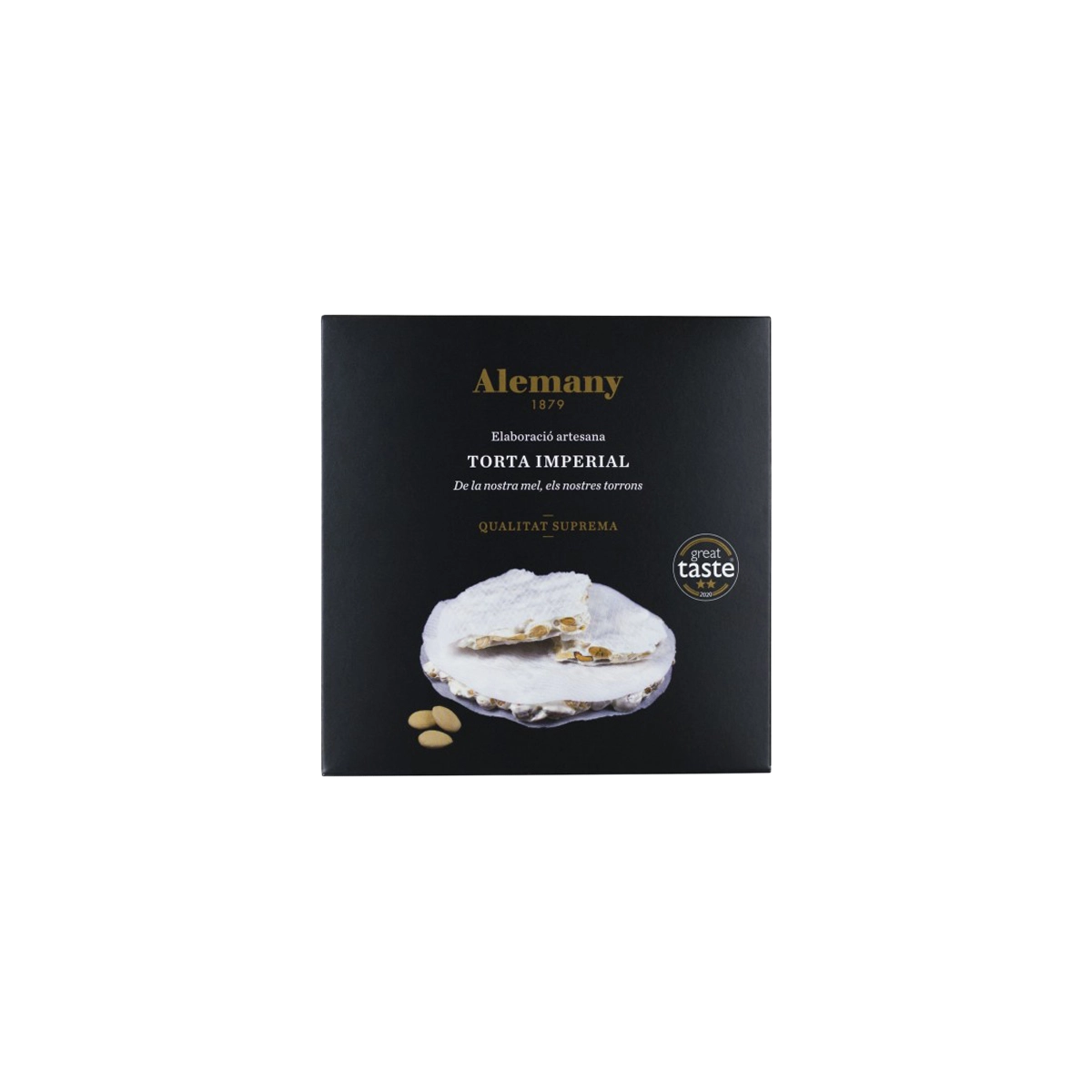
- Alemany Alicante Turrón Imperial Cake, 3.5 oz: $12.95. A small, hard, Alicante-style round with Marcona almonds (70%), rosemary honey, sugar, egg white and a wafer.
- Alemany Chocolate Almond Turrón, 10.6 oz: $29.95.
In the same Turrón & Sweets category you will also find Marcos Tonda drinking chocolate, a stone-ground dark chocolate bar and a box of filled chocolates.
All three have tree nuts. The Jijona and Alicante also have egg and may contain milk and soy; the chocolate one has milk and soy and may contain egg. Check the allergens on each product page before you order.
Planning the whole Christmas table? Our guide to Spanish Christmas food covers what we eat from Nochebuena to Reyes: jamón, cheese and roscón.
FAQ
Is turrón the same as nougat?
Related, but not the same. Spanish turrón is toasted almonds, honey and egg white, and the protected ones have a minimum of almond. “Nougat” is a big family made in many countries, so the name does not tell you which nuts it has or how much. Look at the ingredients.
Which is better, Jijona or Alicante?
Neither; they are different. Jijona is soft and melts slowly; Alicante is hard and crunchy. Everyone has a favorite, so at home there are always both.
Does Suprema mean better turrón?
It means more almonds: at least 64% in Jijona Suprema and 50% in Extra; in Alicante, 60% and 46%. It tells you what is in it, not how it tastes.
How long does turrón keep?
Go by the date on the box. Keep it cool, dry and out of the sun, and once open, wrap it well or put it in an airtight container.