

Quick answer: Keep the ham on its stand in a cool, dry, dark place (ideally 50-60 °F, never near heat), cover the cut face with baking paper and a clean cotton cloth, and plan to finish it within 3 to 6 weeks. Do not refrigerate a whole leg and do not seal it in plastic.
A whole jamón does not need a refrigerator. In Spain we keep it on its stand, covered and ready for the next round of slices. It was cured to last, and the way to keep it once you start cutting is the way Spanish households have always done it: in a cool, airy spot, with the cut face covered and a cotton cloth over it. The enemies are heat, humidity, direct light and air on the exposed meat.
This guide covers where to keep a leg, how to cover it, how long it lasts in different situations, what the white spots mean and how to store sliced and boneless jamón.
Before you cut: storing an uncut ham
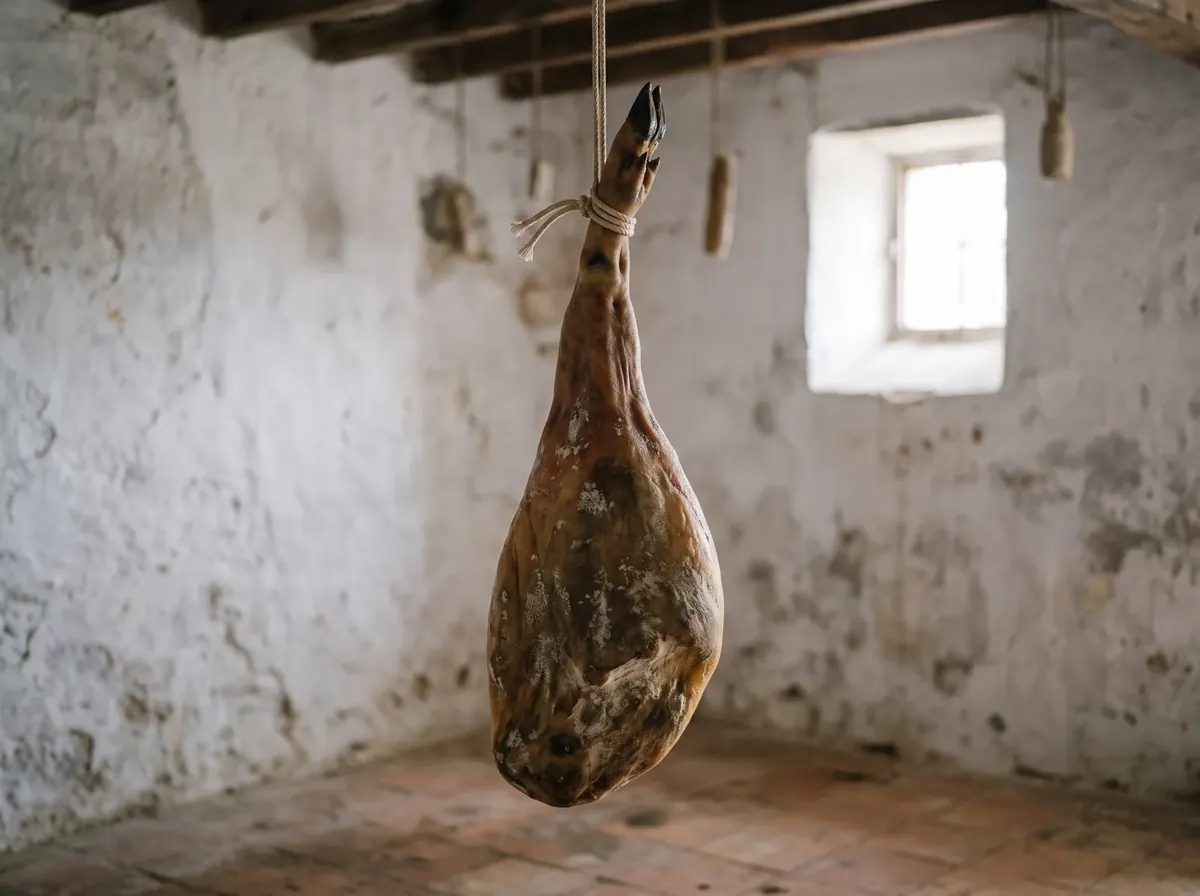
An uncut, bone-in ham is the easiest case. Keep it:
- In a cool, dry, dark place. Spanish sources suggest the ideal range is around 50-59 °F (10-15 °C), similar to the cellars where hams are cured. US retailers often quote 60-70 °F as a workable household range. Cooler is better; avoid anything above that.
- Away from heat and humidity. Stay clear of the stove, the oven, the dishwasher, radiators and sunny windows. Heat accelerates fat oxidation and humidity invites microorganisms.
- Away from strong light. Direct sun or spotlights can change the color and taste of the fat.
- Hanging or on the stand, either end up. Either works for storage. The bag the ham arrives in is for shipping, not for storage: take the leg out and let it breathe.
- Not in the refrigerator. A whole leg does not fit and the humidity is wrong.
Check any date on the label. A well-cured, uncut ham keeps for months, but flavor is best when it is not left sitting for long. If you will not start it right away, plan the cut date for when you have guests.
After you start: the three-part method
Once the ham is on the stand and you begin carving, the clock starts. Protect the cut face every time you stop.
- Cut only what you will eat. Remove the rind and outer yellow fat only from the section you are about to slice. The more surface you expose, the faster it dries.
- Cover the cut face. Lay a sheet of baking paper over the exposed meat, like a lid. Do not lay the trimmed fat back on: many Spanish carvers advise against it, because cut fat oxidizes within a few days and can pass a rancid taste to the meat.
- Add a cotton cloth. Drape a clean, lint-free cotton cloth over the covered cut face. It lets the ham breathe, keeps off dust and insects and slows drying.
Then return the ham to its cool, dark spot. Before the next carving session, remove the paper and cloth, and if the exposed surface has dried out, trim the first two or three slices before you start serving.
Paper, fat, cloth or plastic? Sources disagree
Spanish sources do not agree on every detail, so here is where the weight of advice lies:
| Method | Verdict |
|---|---|
| Baking paper plus cotton cloth | Our recommendation. Protects without sealing. |
| Trimmed fat laid back on the cut | Traditional, but many Spanish carvers now advise against it: cut fat oxidizes within days and can make the meat taste rancid. |
| Cloth only | Fine for a few days, but dries the cut face faster in warm weather. |
| Plastic wrap | Not recommended, not even for a day: it traps moisture against the meat and can spoil it. |
| Covering the whole leg | Some say a whole ham should never be wrapped, because it needs airflow. Cover the cut face only. |
| Refrigerator | Not for a whole leg. |
Our product pages give the same advice: baking paper and a clean cotton cloth. If you use plastic, keep it short-term.
How long does an opened ham last?
The honest answer is “weeks, depending on temperature, ham size and how you cut it”. Spanish sources give ranges rather than a single number: some say about three to four weeks, a widely read Spanish consumer guide says a good-quality ham can last about a month and a half opened in optimal conditions, and producers selling large Ibérico legs commonly say two to three months in a cool place. In hot summer weather, advice shifts to finishing a leg in about two weeks. Our advice: plan to finish a leg or a shoulder within 3 to 6 weeks, while it is at its best.
Use this as a planning guide:
| Situation | Realistic window once opened |
|---|---|
| Cool, dry home (around 50-60 °F), paper and cloth | 3 to 6 weeks (our recommendation) |
| Typical warm kitchen (65-72 °F) | 3 to 4 weeks |
| Hot summer weather without air conditioning | About 2 weeks |
| Shoulder (paleta) | At the shorter end, because it is smaller and has more cut surface per pound |
The ham tells you when it is time: if the cut face turns dark, hard or smells off, trim until you reach fresh meat. If it smells rancid or sticky throughout, do not eat it.
The best strategy is the simplest: choose the right size. If you are feeding four people, a 16 lb leg is more ham than you can enjoy in six weeks. See our guide on how to buy a whole ham for the numbers on servings per leg, or consider a boneless Serrano block or hand-carved pouches.
White spots, crystals and surface mold
- White dots in the meat are almost always tyrosine crystals. They form as proteins break down during long curing, they are 1 to 3 mm, slightly gritty and perfectly edible. Many Spaniards consider them a sign of a well-aged ham.
- Moving white specks are a different matter: that would be ham mites, which can appear if a ham is stored in poor conditions. If specks move, do not serve the surface; contact the seller.
- Surface mold can form on a dry-cured ham stored too warm or too humid. If you see a thin film on the rind, trim the affected surface down to clean meat. If the ham smells off, is slimy or has deep discoloration, do not eat it and contact us.
If you are ever unsure, send us a photo and we will tell you what you are looking at.
Storing sliced and boneless jamón
Hand-carved pouches. Vacuum-sealed pouches follow the date on the label. Keep unopened pouches in the fridge, or freeze them if you want to hold them longer. Once a pouch is open, eat it the same day; take it out of the fridge 10 to 15 minutes before serving so the fat softens.
Boneless blocks. Keep refrigerated, wrapped tightly in butcher paper or plastic. After opening, plan to finish within 3 to 4 weeks, or slice and freeze portions.
Slices you carved yourself. If you cut more than you serve, lay slices flat, wrap them closely in parchment and keep them in the fridge for a day or two. Another option is to vacuum-seal portions of 100 to 200 g (about 3.5 to 7 oz) as soon as you carve. In both cases take the slices out about 30 minutes before eating them.
Freezing a cut leg. We do not recommend freezing a bone-in leg. Portioned slices or cubes are different: sealed airtight they freeze well and are fine for cooking.
Make the most of every part
Nothing from a jamón is wasted in a Spanish kitchen:
- The bone makes excellent stock for lentils, white beans and rice dishes. Cut it into pieces and simmer it for 1.5 to 2 hours; our guide to what to do with the jamón bone has the full method.
- Trimmings and taquitos (small dice from near the bone) go into croquetas, scrambled eggs, lentils and tortillas.
- The fat can be rendered and used for frying, or saved to cover the ham.
- The rind adds depth to stews, removed before serving.
What tools make storage easier?
A steady stand holds the ham where you want it and keeps the cut face level, which makes covering easier. Our Góndola wooden stand is a good everyday stand, and the folding stand with non-slip pads is the most stable for larger legs. Keep your knife sharp with a honing steel; sharper cuts mean thinner slices and less exposed surface. For carving technique, see our step-by-step carving guide.
Frequently asked questions
Should I refrigerate a whole Spanish ham?
No. A whole bone-in leg is cured to be kept in a cool, dry place, and it does not fit in a normal refrigerator. Refrigerate boneless blocks, sliced packs and cut slices instead.
How long does a jamón last after it is opened?
Plan to finish it within 3 to 6 weeks in a cool home, 3 to 4 weeks in a typical warm kitchen and about 2 weeks in hot summer weather.
Should I cover the ham with plastic wrap?
No, not even for a day: plastic wrap traps moisture against the meat and can spoil it. Use baking paper on the cut face and a clean cotton cloth over it, so the ham can breathe.
Are the white spots on my ham mold?
Usually not. Tiny white dots inside the meat are tyrosine crystals, harmless and often a sign of long curing. Fuzzy surface growth or a bad smell is a different story; trim the affected surface or contact us if you are unsure.
Can I freeze leftover jamón?
You can freeze portions of sliced or diced jamón in airtight bags. Thaw in the fridge and bring to room temperature before eating, or use directly in cooking. We do not recommend freezing a whole bone-in leg.
Keep it perfect to the last slice
A well-stored leg stays juicy from the first slice to the last. Choose the right size for your table from our Spanish hams, such as the Serrano hams or Ibérico de cebo de campo, add a stand and knife from ham stands and knives, and you will have everything you need.